


Myth-busting Employer Sponsored Visas: Why Salary Thresholds, Eligible Occupations, and Labour Market Testing Must Align
Missing one key eligibility check can bring your employer sponsored visa Australia application to a halt before it even starts. Many employers and applicants focus on salary or occupation alone but overlook how labour market testing must also fit perfectly with these requirements. This post breaks down why salary thresholds, eligible occupations, and labour market testing must align to avoid costly delays or refusal. Keep reading to learn how these three checks work together to clear your path forward.
Understanding Employer Sponsored Visas
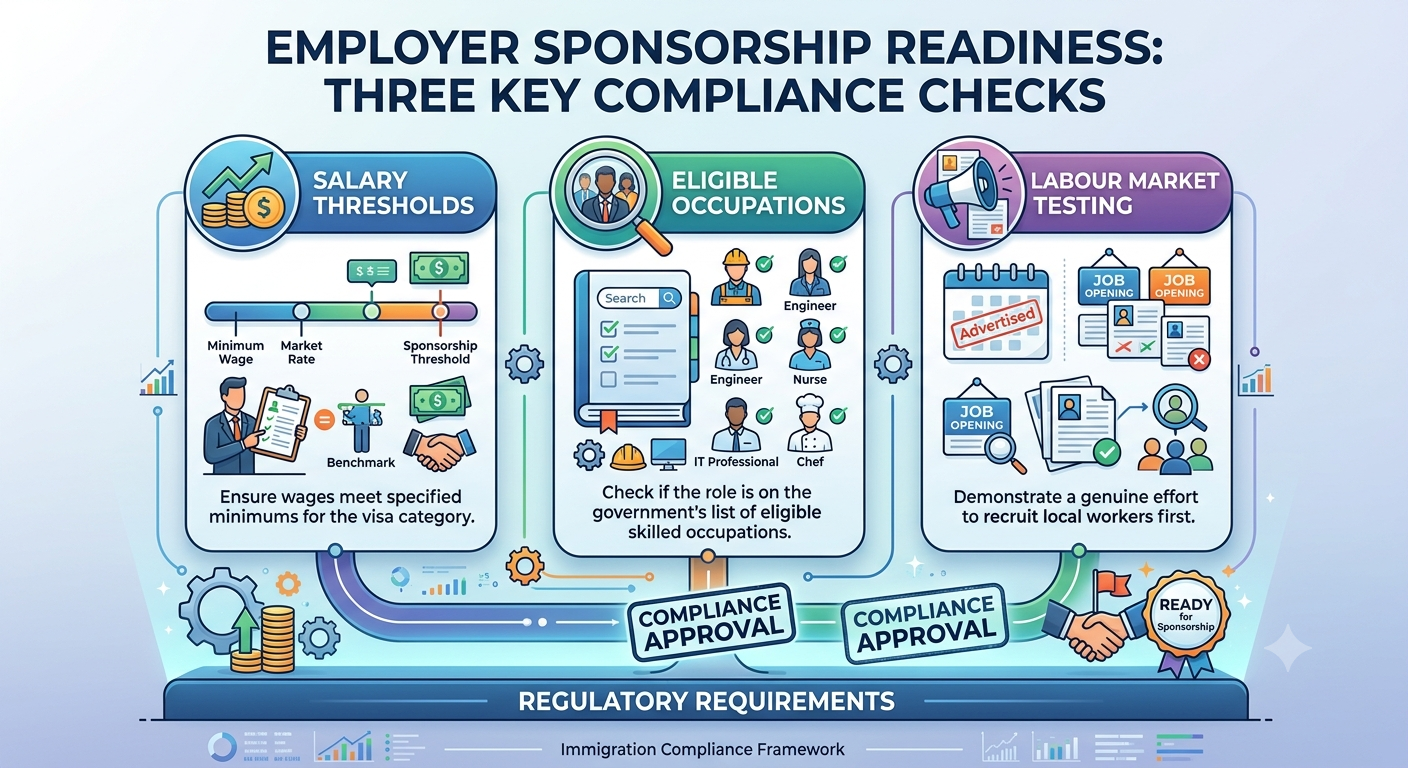
Navigating the world of employer sponsored visas can feel like a maze. But understanding the core elements of this process can make it a lot simpler.
The Role of Salary Thresholds
Salary thresholds are a critical component of employer sponsored visas. They ensure that the wages offered align with Australia’s market standards.
The Temporary Skilled Migration Income Threshold (TSMIT) ensures that workers are paid fairly. It also helps protect the local labor market by discouraging underpayment. Employers must offer salaries that meet or exceed the TSMIT. This prevents visa misuse and supports workers’ rights.
Salary thresholds are not just numbers on a page. They are a reflection of fair work standards. Meeting them is essential for a successful visa application.
Importance of Eligible Occupations
The list of eligible occupations is another cornerstone. It determines which roles can be sponsored under employer visas like the TSS 482 visa and ENS 186 visa.
These occupations are classified based on ANZSCO codes which categorize skilled roles. Employers must ensure the nominated role is on the relevant list. This list is regularly updated to reflect current market needs.
Selecting the right occupation is crucial. An incorrect classification can lead to application delays or rejections. Employers should verify their role against the most recent list to ensure compliance.
Navigating Labour Market Testing

Labour market testing (LMT) is often misunderstood, but it plays a vital role in the visa process. Understanding what it involves can save you from common pitfalls.
What is Labour Market Testing?
LMT is a requirement to demonstrate that no suitable Australian worker is available for the role. This step helps protect local jobs and ensures that employer sponsorship is truly necessary.
The process involves advertising the position in Australia before hiring overseas. Employers must follow specific guidelines for these advertisements. This includes where and how long the job is advertised.
Understanding LMT is important for employers. It ensures that their recruitment efforts are aligned with government expectations. This step is essential to avoid unnecessary delays.
Evidence Required for LMT
Providing evidence for LMT is crucial. It involves documenting the recruitment process and demonstrating compliance with all requirements.
Employers must keep detailed records of their advertising efforts. This includes copies of job ads and data on applicant responses. Proper documentation supports the visa application and shows due diligence.
It’s not just about posting a job ad. Employers must show that they actively sought local talent. This evidence is key in proving that hiring an overseas worker is justified.
Aligning Key Eligibility Factors
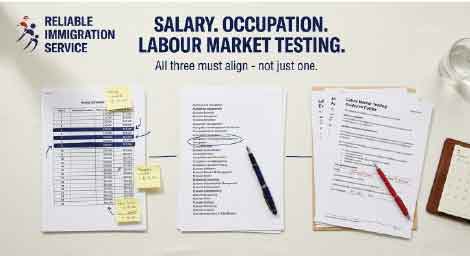
Aligning all eligibility factors is not just beneficial; it’s essential for securing a visa. Let’s explore how to navigate common pitfalls.
Common Misalignments and Pitfalls
Common pitfalls include mismatches between job roles and salary offers. Employers often overlook the importance of aligning all eligibility criteria.
One frequent issue is offering a role that does not meet the salary threshold. Another is nominating an occupation not on the eligible list. These mismatches can lead to application refusals.
Employers must ensure all elements align. This includes job roles, salaries, and proof of local recruitment efforts. Aligning these factors is crucial to avoid common pitfalls.
Ensuring Visa Nomination Alignment
Ensuring visa nomination alignment involves a careful review of all requirements. Employers must verify that every aspect matches the visa criteria.
Start with a checklist: verify the occupation, salary, and LMT compliance. This helps ensure that no aspect is overlooked. Employers should also seek advice if unsure about any requirement.
Aligning all factors ensures a smoother visa process. It’s about ticking all the right boxes and avoiding unnecessary complications. A well-prepared application stands a better chance of success.
Frequently Asked Questions
What is the role of salary thresholds in employer sponsored visas?
Salary thresholds ensure fair wages are offered to sponsored workers, aligning with Australia’s market standards. Meeting these thresholds is essential for visa approval.
How do eligible occupations impact visa applications?
Eligible occupations determine which roles can be sponsored under employer visas. Selecting the correct occupation from the current list is crucial for compliance.
What is Labour Market Testing (LMT)?
LMT involves proving that no suitable Australian workers are available for the role. This requires advertising the position locally before seeking overseas candidates.
What evidence is needed for Labour Market Testing?
Employers must document their recruitment efforts, including job ads and applicant responses, to demonstrate compliance with LMT requirements.
Why is aligning eligibility factors important for visa nomination?
Aligning job roles, salaries, and recruitment efforts with visa criteria helps avoid application refusals and ensures a smoother process.
Contact us for more information or any employment visa hire matter – Free Assessment – Reliable Immigration Service