

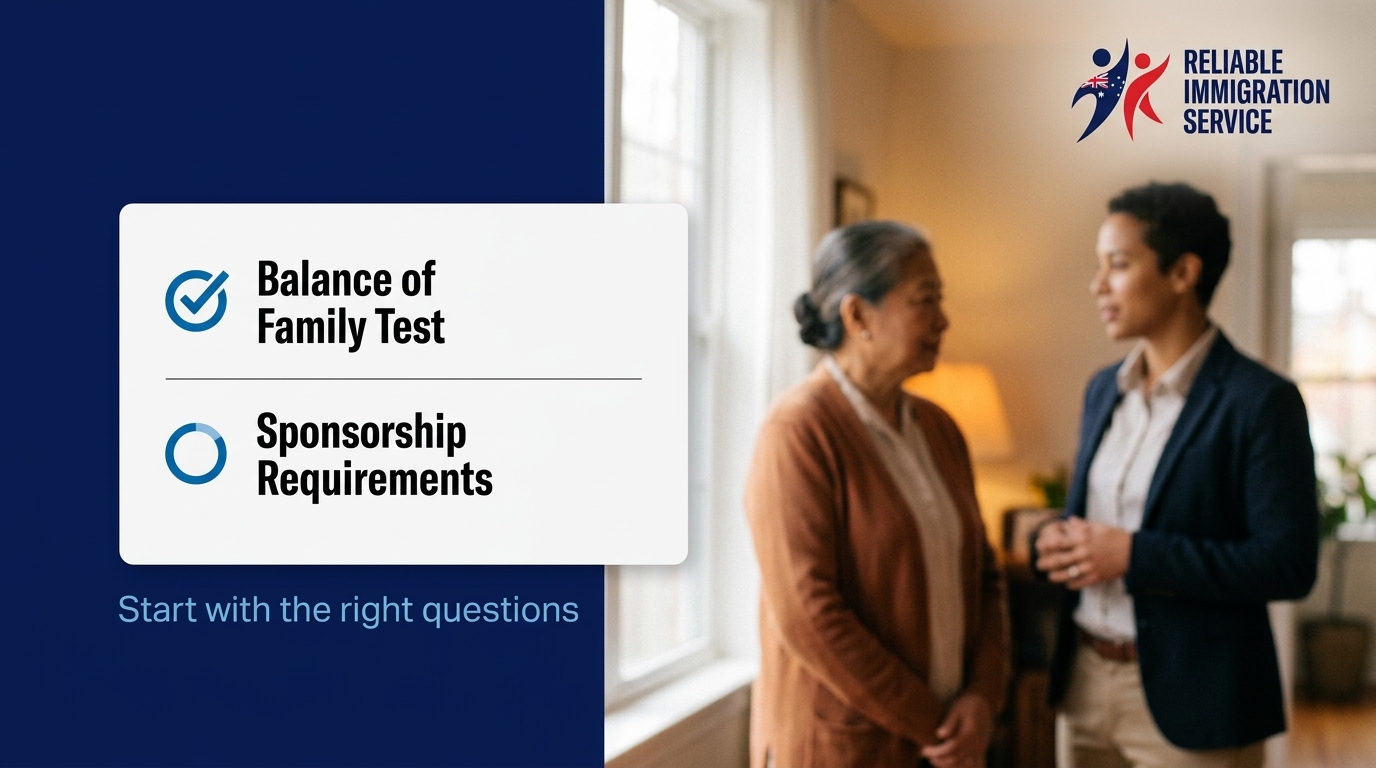
Parent visas start here: Balance of Family Test and sponsorship are your first two gates
Many families rush into their parent visa applications without checking the most crucial steps first. The Balance of Family Test and sponsorship requirements often decide if your application can move forward or face early refusal. Starting with a clear review of family composition and sponsor eligibility saves time, money, and heartache. This guide lays out why these two gates are your first stop in the parent visa Australia process and how to pass them confidently.
Understanding Parent Visa Australia
When starting the parent visa process in Australia, understanding the initial requirements can save you from unnecessary complications. Two major checkpoints, the Balance of Family Test and sponsorship eligibility, form the foundation of a successful application.
Balance of Family Test Explained
The Balance of Family Test is a critical factor for parent visa eligibility. This test requires that at least half of your parent’s children live in Australia or that more children live here than in any other country. This rule ensures that the parent has a significant family connection within Australia.
For instance, if you have three siblings and two live in Australia while one lives in Canada, your parent would pass this test. It’s vital to perform an accurate count of each child’s residence status to prevent application delays.
Failing this test often means re-evaluating your family structure or considering alternative visa pathways, like temporary options, which do not require passing this test.
Sponsorship Requirements Overview
Sponsorship is the next essential hurdle in the parent visa process. The sponsor must be an Australian citizen, permanent resident, or eligible New Zealand citizen, typically the adult child living in Australia.
This sponsorship demonstrates that the parent has ongoing support in Australia. The sponsor must meet certain financial and legal criteria, proving they can support their parent without relying on government assistance.
Choosing the right sponsor is crucial, as it can significantly impact the application process. Carefully assess who among your family members best fits the sponsorship role to avoid complications.
Navigating Sponsorship Eligibility
After understanding the initial requirements, the focus shifts to the nuances of sponsorship eligibility. Ensuring your sponsorship meets all criteria is crucial for moving forward in the visa process.
Key Factors for Sponsor Eligibility
Confirming sponsor eligibility involves several key elements. Primarily, the sponsor must be over 18 years old and have been living in Australia for a reasonable period. This ensures they have settled and can provide stable support.
Additional factors include the sponsor’s financial situation. The ability to financially support the parent without government aid is a mandatory requirement. This provides assurance to the Australian government that the sponsor can bear the responsibilities involved.
Remember, being thorough in assessing these factors can prevent later issues. Double-check all criteria to confirm that the chosen sponsor fits the necessary profile.
Common Mistakes in Sponsorship
Mistakes in sponsorship are common but avoidable. One frequent error is assuming any family member can qualify as a sponsor. It’s not just about being an Australian resident; the sponsor must meet all criteria, including age and financial stability.
Another pitfall includes misinterpreting financial requirements. It’s not just about having a job; sponsors need to prove they can support their parent financially over time. Always ensure that financial documents are comprehensive and accurate.
By understanding these common issues, you can proactively address them, smoothing the path to a successful application.
Preparing for Visa Success

Having a good grasp of sponsorship and family balance is just the beginning. Preparing thoroughly increases your chances of a successful visa outcome.
Family Composition Checkpoints
Accurately assessing your family composition is critical. Begin by listing all siblings and their residency status. This information determines your parent’s eligibility for the Balance of Family Test.
Consider any changes in family dynamics, such as siblings moving countries or changes in residency status, as these can affect eligibility. Regularly update your information to reflect any such changes.
This checkpoint ensures all family details are in order, providing a strong foundation for your parent’s visa application.
Importance of Initial Assessments
Initial assessments are crucial for avoiding pitfalls later in the process. They offer a comprehensive view of your parent’s current eligibility status, highlighting areas that may require attention.
Such assessments also provide insight into potential pathways, whether that’s pursuing a permanent visa or exploring temporary options. They empower you with knowledge and clarity, reducing uncertainty and increasing the likelihood of success.
In conclusion, starting with a thorough understanding of the primary requirements, and ensuring all criteria are met, lays a strong foundation for navigating the parent visa process confidently.
Frequently Asked Questions
What is the Balance of Family Test?
The Balance of Family Test is a requirement for parent visas in Australia, where at least half of a parent’s children must live in Australia or more children must live in Australia than any other country.
Who can sponsor a parent for a visa in Australia?
A sponsor must be an Australian citizen, permanent resident, or eligible New Zealand citizen, usually the adult child of the parent applying for the visa.
What are the key factors for sponsor eligibility?
The sponsor must be over 18, have lived in Australia for a reasonable period, and demonstrate financial stability to support the parent without relying on government aid.
How can I avoid common sponsorship mistakes?
Ensure that the chosen sponsor meets all criteria, including age and financial requirements. Misinterpreting financial stability or assuming any family member can sponsor are common pitfalls.
Why are initial assessments important in the visa process?
They highlight eligibility status and potential pathways early on, reducing uncertainty and increasing the chances of a successful outcome by addressing issues before application submission.