
USCIS Case Status Login: Treat It as a Checkpoint, Not a Crisis
Staring at the USCIS case status login page can stir up more worry than answers. Most of the time, the real challenge isn’t the login itself but understanding what the status actually means and what to do next. Michelle Brewty, a former immigration officer, breaks down how to treat this moment as a simple checkpoint. Follow her clear checklist to separate routine updates from red flags that need your attention. For more information on checking your case status online, visit this USCIS resource.
Understanding USCIS Case Status Login
Navigating the USCIS case status login can be tricky. But once you understand the common issues and see the login as a simple checkpoint, it becomes much easier.
Common Login Issues Explained
First, let’s tackle some typical login problems. Sometimes, the USCIS website might be down for maintenance, causing temporary access issues. You might also face delays if your internet connection is unstable. To avoid these problems, ensure you have a stable internet connection and check the USCIS website for any maintenance announcements. If the problem persists, visit the USCIS technical support page for further assistance.
Why Status Shouldn’t Cause Panic
It’s common to feel anxious when checking your case status. However, it’s vital to remember that status updates are routine. Changes in status do not always signal a problem. They often reflect the progress of your application through the system. By understanding this, you can reduce unnecessary stress. Think of it as just part of the process.
Viewing Login as a Checkpoint
Instead of seeing the login as a source of stress, view it as a checkpoint. Each time you log in, you’re gathering information to guide your next steps. This insight helps you decide whether to wait, investigate further, or take action. By staying informed, you maintain control over your case.
Decoding Your Case Status
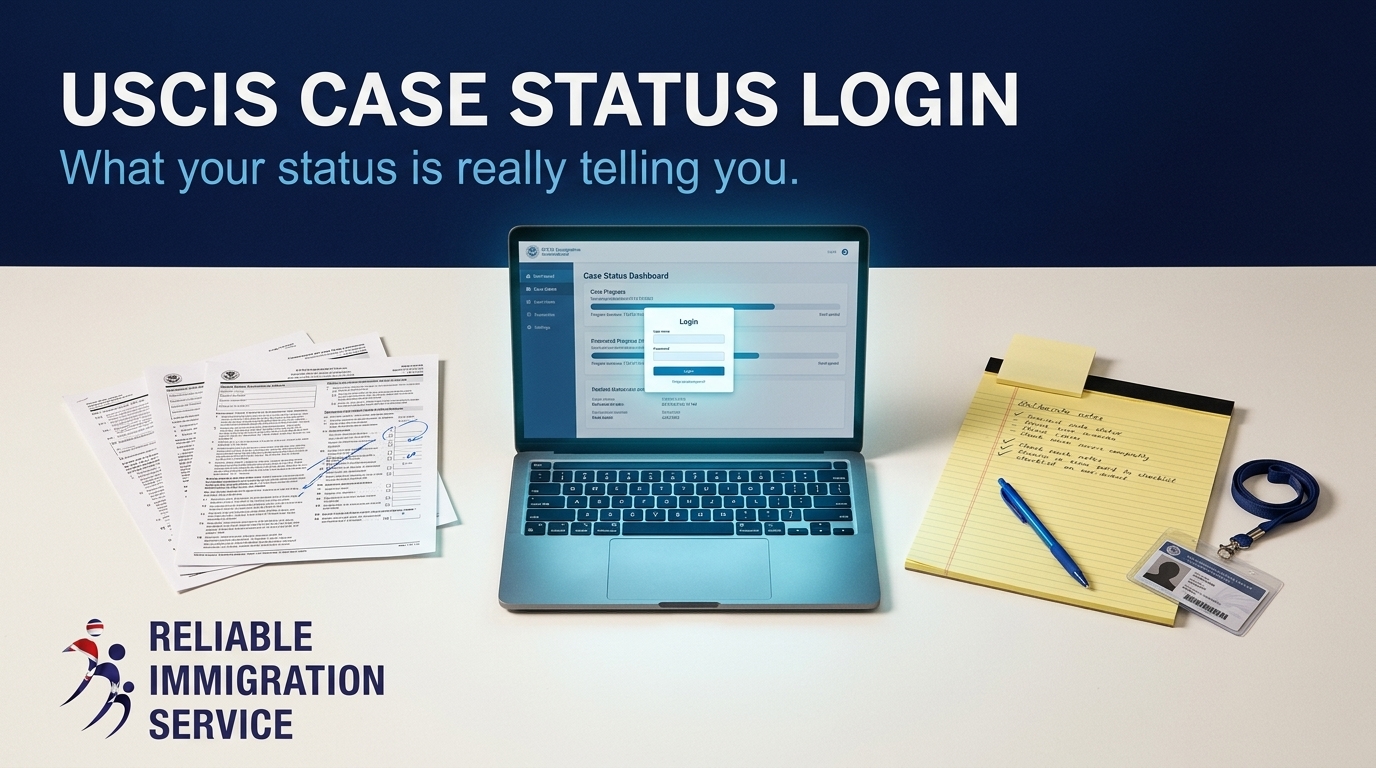
Once logged in, understanding the status updates can help you differentiate between routine and urgent matters.
Interpreting USCIS Status Language
USCIS uses specific language to describe your case status. Terms like “Case Received” or “Case Approved” are straightforward. However, phrases like “Request for Evidence” (RFE) or “Notice of Intent to Deny” (NOID) require more attention. Familiarizing yourself with these terms can help you understand what each update means. For a detailed guide on USCIS statuses, visit this USA.gov resource.
Identifying Routine vs. Urgent Updates
Routine updates include acknowledgments of received documents or progress through standard processing stages. Urgent updates, like an RFE or a NOID, need immediate attention. By identifying the nature of each update, you can prioritize your actions and avoid unnecessary panic.
Red Flags Requiring Action
Certain updates are red flags that demand quick action. An RFE, for example, indicates that more information is needed to process your application. A NOID suggests potential issues with your application. In these cases, prompt action is crucial. For guidance on handling visa refusals and appeals, explore our Visa Refusals And Appeals resource.
Taking the Next Steps

After identifying your case status, it’s time to decide on your next steps.
When to Contact USCIS
If you encounter a confusing or concerning status update, contact USCIS for clarification. Use their service request and support options to get the help you need. It’s important to act promptly, especially if you receive an RFE or NOID.
Utilizing Service Requests and Support
USCIS offers several support options, including service requests, to address your concerns. These requests can help resolve issues like missing updates or application delays. Using these resources ensures you’re actively managing your case and reducing potential delays.
Free Initial Assessment Offer
For personalized guidance, consider booking a free initial assessment with Reliable Immigration Service. Our experts, led by Michelle Brewty, can help you understand your status and navigate the next steps. With our support, you’ll feel more confident and informed about your immigration journey. Visit our EOIR Case Status resource for more insights.
In conclusion, remember that the USCIS case status login is a tool to keep you informed. By understanding its nuances, you can manage your application process with confidence and ease.